24/01/2013

Darksiders (PC)


Developer: Vigil Games
Publisher: THQ
Release Date: September 22, 2010 (PC) Platform: PC, Xbox 360, PS3
RPVP: 19.99€
Size: ~9972 MB (PC)


Overview / Plot


In Darksiders, a relatively simple hack-n'-slash game, you take the role of the Horseman War, falsely accused of triggering the apocalypse. The premise is simple: to cut through hordes of demons and angels alike, solve puzzles, and while you're at it, get some cool power-ups. Darksiders has been heavily criticized over the years as a God of War / Zelda ripoff, and I'm willing to agree on some points there. But, then again, even if I do agree that the game took most of its elements from those two other merchandises, it's also true that the resultant mix can be looked at as something unique. And in a time where originality seems to be dying, it's good to see that some studios are willing to try new combinations with ingredients that we're already used to. If it works for food, it might work for videogames. After all, videogames are "brain food" (some more than others, of course). After being presented with a short cinematic explaining the plot behind the happenings in Darksiders in one minute or so, you can begin your button mashing. In the early phases of the game you are presented with some hints, telling you how to do stuff. Still, there's really nothing complicated here, so you'll soon feel at home. In fact, after playing through the game twice (in different difficulties) the aspect I find most difficult to understand about this game is still the plot itself. If you get distracted for 2 seconds on the opening cinematic or in any of the first parts of the game you will be left behind and in complete confusion of what is happening and why is it happening. The opening cinematic just compresses a lot of information, and it takes concentration to understand everything that's being told to you. This of course, if you don't just skip the whole thing just so you can start slashing away sooner.  The comic book included might help a bit, giving some background info on certain characters and explaining the reasons behind some of the game's events. In a somewhat generic way, it all comes down to a war between Heaven and Hell that has been dragging on for an eternity, without any victory for either side. Then arrives The Charred Council, whose purpose is to maintain balance between both sides. For this they use the Four Horsemen (War, Death, Strife and Fury) to enforce peace and kick either side's butt when necessary.

Only later do the humans come into the picture, and since these are "still weak, but cunning" according to the Council, a truce is formed between the kingdoms od Heaven and Hell. The plan is to have the decisive war (the Endwar) when all three kingdoms are ready (the new kingdom being called the Kingdom of Men). The go-sign for the war being the breaking of all of the Seven Seals. All remains peaceful, until demons start raining from the sky. The war rages and War, the Horseman is summoned, but of course, he soon realizes that something isn't right. His brothers are nowhere to be found and Abaddon, general of the Heaven's forces insists that War shouldn't be there, since the seven seals were never broken. Eventually, War gets to face Stragga, a powerful demon, and it would have been a pretty easy fight for the Horseman, were it not for the fact that he had broken the law, by waging war with the seals intact. For this reason, his powers are taken and he is defeated. Saved from death by the charred council, War is accused of causing the apocalypse and of siding with Hell's forces (kinda stupid since all you do up until this moment is kill demons). War defends himself, and asks to be taken back to earth so he can find whoever is responsible for this and punish him, thus clearing his own name. The council agrees, but not without linking War to The Watcher, an agent of the council that is to keep an eye on war and kill him should he stray from his path. This is where the game truly begins.


Opinion


Lets begin with gameplay. Combat mechanics are easy to get around, and this might be the reason many critics said the game is an excessive "press X to win" experience. While correct up to a point, I wont agree on it being boring or too easy. After playing other games of the same kind that contain an abusive amount of skills and button combinations you need to memorize to play decently, I felt Darksiders was more "light"in terms of what you need to learn and use. There's not that much variety in what it comes to tactics, certain enemies require you to hit and run to be able to defeat them and leave with your health intact (at least if you're playing in a higher difficulty) and bosses aren't too difficult. Additionally, if you don't rush headlong into them you can defeat them in your first try with little trial and error. This helps keeping the game's difficulty balanced. The Amount of weapons feels insufficient, even though with the experience needed to level up each one, it's unlikely you'll reach the end of the game with more than one maxed out. Weapon enhancements are very well hidden, and some require backtracking to find, once you obtain certain abilities. Thus, 100% completion is very hard without a guide. Graphical options, once again, are the ones we're used to in console ports: resolution and a v-sync switch. The graphics however, are pretty polished and the game runs smoothly on any decent computer. As for bugs, nothing to point out.

Cut-scenes though, are pre-rendered at a lower resolution and quality, so if you are playing in 1080p, you'll definitely notice that. It's quite annoying, since they could have just used the game engine to do that in real-time at whatever resolution the game was running at. Having cut-scenes with less quality than the game itself is annoying. As for longevity, the game is considerably long, and the dungeon maps can prove to be really confusing, should you need to backtrack in order to get hidden power-ups or valuables. Some achievements require an awful lot of grinding as well and the Dark Rider achievement is just ridiculous. I had to put some rubber bands on the controller's analog sticks and let the character go around in circles for several hours to get it. Some abilities, such as Stoneskin have an abusive cost, there's no way you're gonna rank up even one of them to its highest state if you don't grind souls for hours. Even after getting every single chest in the game and grinding for some achievements, I didn't manage to get any ability to maximum rank. Good thing there isn't an achievement for that.

Some Aspects


  • Cinematics rendered in low quality;
  • Difficulty is well balanced;
  • Plot is confusing at first;
  • No side-quests / Too Linear;
  • Voice acting is good in general, but War's voice sounds forced;
  • Interesting puzzles and good gameplay in general;
  • Fair amount of weapons and skills.

With Darksiders II out now, I'm expected to see the first game getting some more sales within the next weeks.I haven't played the second one yet, but I can only hope that there is more to do than the main storyline. Because Darksiders tends to turn into a boring desert after you finish it and there simply is no reason to keep playing it. Nonetheless, it's a good and solid game, and a starting point for what could become a big franchise. Hopefully, we will see it getting out from underneath the skirt of its older brothers and developing into something unique, shutting up the naysayers.

Final Gameplay Stats:


Time Played: 55 Hours
Achievements Unlocked: 43 / 43 (100%)
Difficulty played the most: Apocalyptic

09/07/2012

ICO (HD)


Details


Developer: Team ICO
Publisher: Sony Computer Entertainment
Reviewed Platform: PS3
Game Modes: Single Player
RPVP: $19.99* (Includes Shadow of the Colossus) Release Date (PS2): September 24, 2001 (North America)
Release Date (PS3): September 30, 2011 (Europe)


Overview


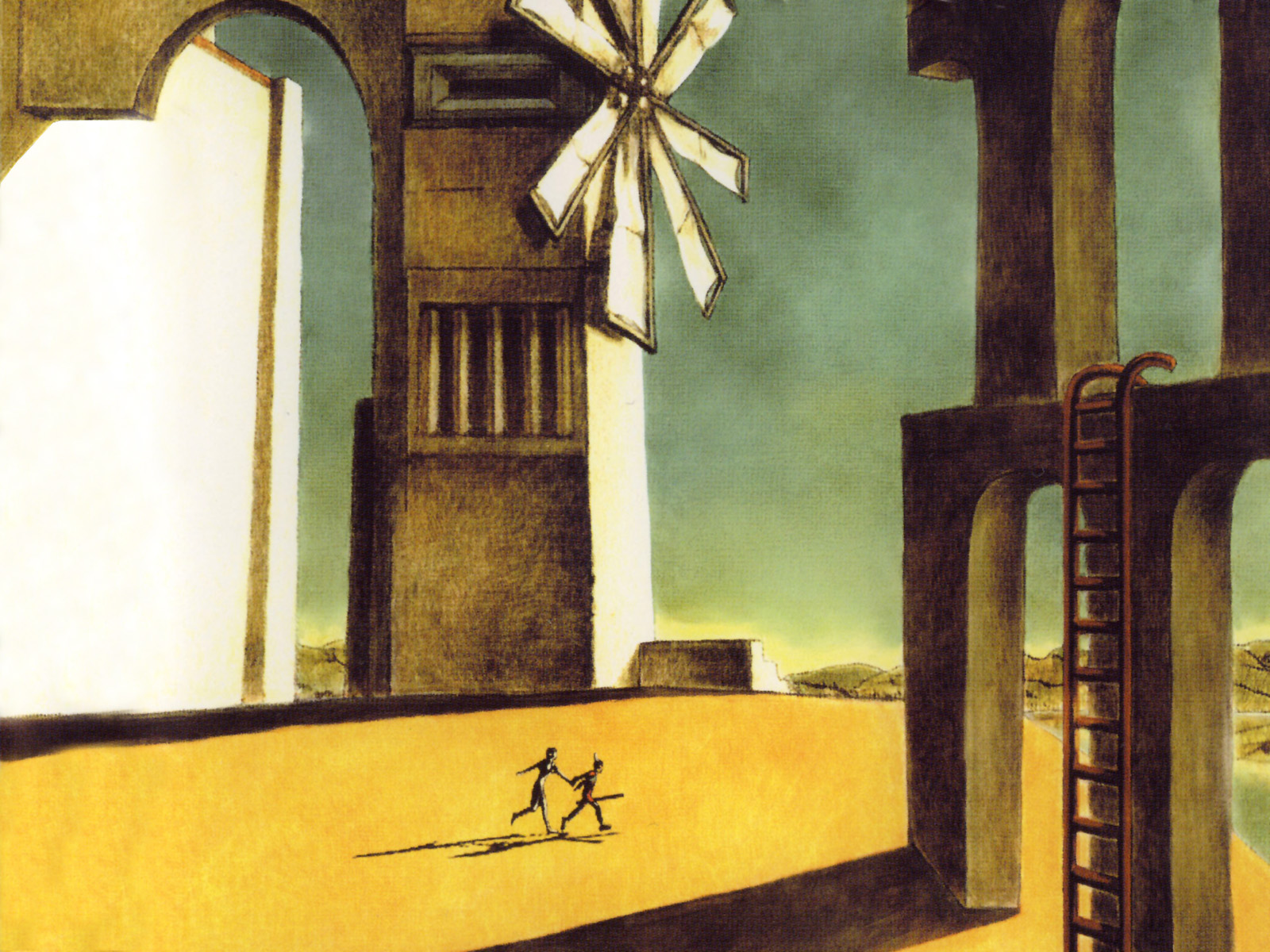
ICO starts with a horned young boy being imprisoned inside a castle.
The game itself is basically his attempt at escaping from the castle, where the player has to solve puzzles and fight mysterious beings to protect a young lady that is also imprisoned in the castle. She ,in turn, has the power to open special doors.


Plot


The Queen
There's not much to say here, the boy finds the girl at the beginning of the game and finds out that she can open special doors. So then, they try to escape the castle. Since she can't jump, climb, and fall as well as the boy, the player will have to change the environment so that she can progress as well.
She will be constantly under attack by "shadow creatures", so you have to stay on your toes.
Halfway through the game the "queen" appears, and she looks like a combination of the girl with the shadow creatures. Obviously she doesn't want the girl to escape, but you won't know why until you reach the end of the game.


Gameplay and Difficulty


Boy and girl on a saving bench
In the game you can jump, grab things such as wood sticks, swords, bombs, etc, pull and push boxes, activate switches, grab the girl to take her with you and also call her to go near you.
You will have to use this to create paths for the girl to progress across sections of the game, and  you might need to help her jump across gaps by grabbing her or push her from a higher spot.
The game isn't very difficult or very long and there's even a trophy to complete the game in less than 2 hours (even though it took me almost 7 hours to complete it on my first playthrough). The save system is also interesting because you can only save while sitting on special stone benches and you need to sit down with the girl to be able to do it.
The attacks on the girls normally happen when they arrive at a new zone or when a puzzle is completed. Also, if the girl is left alone in a room for a long time or the boy gets too far away a spontaneous attack will occur.
There are different types of shadow creatures, some climb walls and become "shadows" for a time, becoming immune to attacks, others are human shaped and some even fly.
They will try to take the girl to their spawning points and start to dragging her inside. The boy will have to fight the creatures with his horns if he is unarmed, or with a stick/sword. If the creatures manage to take the girl to their spawning points the boy will have to push her out before she disappears and you lose.


Opinion


I think that the best word to describe this game is the word 'different'. The music is very calm and fits into the desolate castle perfectly. The puzzles are good and the whole boy/girl interaction is interesting.
The controls aren't bad, with R1 you grab or call the girl, pretty much like in Shadow of the Colossus, where you use R1 to grab on to your enemies. The graphics aren't bad for a 2001 game and the overall ambience is pretty good.
The end is amazing considering the type of game: the normal turn of events near the end, the well though last boss mechanics and the satisfactory ending make this game something that you should not miss if you're into a different type of game.
Verdict: Recommended!


The Breakdown


Positive Aspects
Negative Aspects
Needs Improvement
    • Good gameplay.
    • Has a good level interaction with the environment.
    • Seamless transition between rooms.
    • Good puzzles.
    • Nice soundtrack.
    • Amazing and beautiful castle design.
  • Occasional pathfinding issues on the girl's AI.
  • The speed at which she climbs ladders...
  • The back story could have been better explored, although it gives the whole game a nice, mysterious aura.


My Playing Statistics


Time Played: 7 Hours
Trophies Unlocked: 9/16 (43%)
Number of Times Played: 1
*RPVP based on GameStop retail price for PS3


by Regateiro (Sabexbem)

04/04/2012

Anomaly: Warzone Earth

Developer: 11 Bit Studios
Platform: Windows, Mac, Android, iOS, Xbox360
Release Date: April 2011
RPVP: 9.99€ (Steam)
Size: ~ 430MB (PC)
Genre: RTS, Reverse-Tower Defense 


Overview and Plot


The story starts in the near future when parts of an alien spaceship fall on earth (more specifically in Baghdad and Tokyo) and the so-called “Anomalies” appear around them. Your first mission as the 14th Squad is to investigate the first anomaly in Baghdad, see what’s causing interference with the communication systems and find gather information about why and what is happening inside the anomaly (which is where the first mission ends).


Gameplay


The gameplay is simple: you control a given set of units that must complete objectives, such as destroying target buildings or simply reaching a specific point in the map. Obviously your enemy will do everything to stop you from doing just that. You path will be riddled with various forms of enemy machinery, from small laser towers, energy charged towers, giant cannons and so on. During the first couple of missions you can’t buy any units, but as you progress (the first 2 or 3 missions are like a tutorial where game elements are gradually introduced and explained) you will be able to buy or sell units. Also, along the way, new units will become available for purchase, each one with a set value of armor and power, which dictates how much damage they can do or take. Each unit has its own strengths and weaknesses and to be able to progress in more difficult missions or higher difficulty modes you will have to do some micromanagement, since each unit is better suited to deal with a specific kind of enemy. There is also a shield unit that doesn’t do any damage but instead, protects the 2 units around it, one in front of it and the one in its back. This protection comes in the form of a second health bar that regenerates with time should your units stop taking damage for a while. Each unit can be upgraded three times, each upgrade increasing its armor and damage values by a set amount. Each upgrade costs more than the previous one and to get money you need to gather rare minerals found through the missions. You also get some money just for killing enemies. Upgrades need to be well managed, since you need to decide which unit should be upgraded for each situation, since the money is scarce, at least on Story Mode.
You can modify the path your units take based on available roads in the map, and in most situations you must choose wisely, whether it is to take less time to get to your objective or to minimize the amount of enemies you will have to face. Your character (the captain of the 14th Squad) is the character you control directly, moving him to any spot by clicking on the map. With his combat suit, he needs to be constantly used to help your units in their mission. The combat su8it has several abilities that are introduced one at a time over the first couple of missions, except the first one with is the Repair ability, which you already begin the game with. Each ability can only be used a very limited number of times and recharges aren’t abundant so you have to manage them well.

At the end of each mission you may be awarded medals for your performance. The three medals are for Directionability (usually attained by going through the fastest path), Ruthlessness (killing lots of enemies) and Efficiency (usually ending a mission with a certain number of ability charges left). Moreover, each medal has 3 different ranks (bronze, silver and gold obviously). There are a couple of different game modes besides the story mode like the Baghdad Mayhem or Tokyo Raid where you have to go through a large level without your captain (meaning you can’t use any abilities) or beating a set number of enemy waves in a regular map (each wave spawns after you kill the previous one and its harder to beat). These modes have some extra cash for you to be able to further upgrade your units.


Opinion


First off I’ll say that the way game mechanics are introduced is pretty good, not too fast, not to slow. Everything is pretty intuitive except certain effects that specific weapons have on your machines, for example, when energy-charged machined fire at your tanks, the shoot twice as fast, and how this must be used in  order to take advantage of certain situations. Casual difficulty is pretty balanced but Harcore revealed itself completely impossible for me from mission 11 onwards. The plot is very very simplistic, wich is good on one hand, theres not much information for players to absorb on that side. The extra modes are fun to play but pretty difficult and the Story mode could be longer. Just like almost every game in my account, I picked this one up on a sale and I liked it. If you don’t like strategy or tower defense games you probably should star away from it though, because if you don’t like the style of gameplay itself, other game elements like the story wont help much either. if you like this kind of game, go ahead. There’s achievements of course and a Leaderboard which tracks your total game score.


The Good, the Bad and the Ugly


The Good
The Bad

  • Simple, not too much information to absorb;
  • Variety of vehicles and enemies;
  • Interesting extra game modes.
  • Difficulty ramps up too quickly in story mode; 
  • There’s not much story to it, but then again I didn’t really expect it to.


Conclusion


If you’re not a fan of this genre, I suggest you stay away. Otherwise, well, it’s a simple game that’s pretty fun, at least for a while. I recommend getting it while it’s on sale.


My Final Gameplay Stats


Time Played: 21 Hours
Achievements Unlocked: 20 / 43 (47%)
Difficulty played the most: Casual / Hardcore


Screenshots taken at 1920x1080. Title image taken from Steam Grid view. I do not own it.

20/03/2012

Audiosurf


Developer: Dylan Fitterer
Platform: Windows, Zune HD
Release Date: February, 2008
RPVP: 9.99€ (Steam)
Size: ~ 375MB (PC)
Genre: Rhythm, music, puzzle.
Audiosurf rounded

Overview


Created by Invisible Handlebar, a company composed created by Dylan Fitterer, Audiosurf is a mix of a rhythm and puzzle experience. After choosing a song offered by the game or imputing one of your own personal collection, the game analyzes it and creates a space track where in an F-Zero –like ship you struggle to collect (or evade) blocks.


Gameplay


Of course, there's a bit more to it. the shape, and orientation of the road depends on the rhythm of the music (on easier tracks the road will be something like a diagonal line pointing upwards. If the music has a faster rhythm, the opposite occurs. The traffic indicator serves as a difficulty indicator for most game modes, giving you an idea how how hard the track is (the highest the traffic, the more blocks you get). Also, the speed at which you navigate the very track depends on the speed of the music. If you use a calm, classic music for example, the speed will remain more or less constant. However if you use a song with lots of drumming, the speed will vary a lot (making it harder on several game modes) and the bumps in the road will be more frequent. There are several game modes, the most common being the Mono mode, where your objective is to simply clear the track getting as many colored blocks as possible while at the same time avoiding all the grey blocks. They will disappear a couple of seconds after each time you match 3 or more together, thus, giving you a little extra time to add a couple more to the combo. The more blocks matched, the more points you get. You also get a set of points for each block collected up to a maximum of 200 per block. however, if you get a grey one the score count will reset to 1, posteriorly increasing to 2 and to every other even number until it reached 200 again or until you get another grey block. you can clear the grey blocks from time to time using your score as your payment and you can get extra bonus points by fulfilling certain requirements, such as matching 11 blocks at once, dodging all grey blocks or finishing the song with your block storage empty. Your score will then determine which medals you will receive, if any (point requirements for each medal are shown before you start).there are other game modes such as the Pointman, the Eraser and even a two-player mode, where one player uses the keyboard and other the mouse to move his ship.

Different game modes include having to to grab match blocks of various different colors at the same time, while being careful not to overfill you block storage space. There are no grey blocks in these modes, but here certain colors are worth more points than others. Consequently, they are also less common. Some of these modes count with special tools to aid with your mission, such as the option to shuffle your blocks or “Paint” found during the track to change the color of all your blocks or even a simple block boost you can get that gives you some blocks of a specific color easily identifiable by looking at the item. There is also a Visualizer mode, in case you need a fancy Ambience for your parties (heh). There are also three categories for the game modes, each being more difficult than the previous one. Some game modes are exclusive to some categories. If you create an account and keep yourself logged in you can compare scores to your friends and receive emails in case they beat yours (some achievements involve doing just that).


Opinion


There’s not much to say here, basically it’s a good game to pass the time, and as long as you have new music, it has an infinite replay value. The only downsides are graphic-related but the game has low system requirements any normal computer nowadays can run it. I think it should include another game mode like the Mono mode but without grey blocks and more colored blocks. Here the challenge would simply be to get as many colored blocks as possible. Oh and by the way: I picked it up while it was on sale….for 1,36€.


The Good, The Bad and the Ugly


The Good
The Bad
The Ugly
  • As long as you have music files, it has an infinite replay value;
  • Various game modes;
  • Achievements and e-mail notices.
  • Needs more visualization options, you cant change the resolution on window mode; 
  • Full-screen imput lag, not good in this kind of game.
  • The Achievements are all pretty easy to get as long as you “cheat”. A couple more achievements wouldn’t hurt.

My Final Gameplay Stats


Time Played: 13 Hours
Achievements Unlocked: 19 / 19 (100%)
Game mode played the most: Ninja Mono
Longest Music Played: ~15 mins


Screenshots taken at 1920x1080. Title image taken from Steam grid view. I do not own it etc.

06/02/2012

Alice: Madness Returns


1328394394 (1)
Developer: Spicy Horse
Publisher: EA
Platform: PC, PS3, Xbox360
Release Date: 16, June 2011
RPVP: 49.99€ (Steam)
Size: ~ 7.9 GB (PC)
Genre: Action, Adventure, Platform, Hack-n'-Slash


Overview


Alice: Madness Returns continues the story of the PC game American McGee’s Alice out in 2000. Like its predecessor, it was developed by the Chinese studio Spicy Horse. The PS3 and Xbox360 Versions of the game include a code you can use to download a console port of American McGee’s Alice, but even without the code, console players can purchase the game using Microsoft Points on XBL or with regular cash on PSN.


Plot

Madness Returns goes back to Alice Liddell, who lost her sanity after surviving the fire that destroyed her home and killed her whole family. Years later, she is released from Rutledge Asylum and began living in London, where along with Dr.
Bumby, she attempts to forget her traumatic memories of the death of her family in hopes of getting rid of her mad nightmares. Unfortunately, Alice’s subconscious ends up puling her back to Wonderland. Upon arriving, though, Alice soon discovers that this Wonderland is infected with destruction and it’s being ravaged by an infernal gigantic train of origins unknown. Thus, Alice begins her quest to find out about who runs the train and what purpose does it serve, regaining lost memories along the way. Memories of her past and her family and the fire that took place years before, in an attempt to regain her sanity and save Wonderland from destruction. While there, she is always accompanied by the cynical Cheshire Cat, who watches over her, providing advice, often in the form of more or less philosophical sentences.


Gameplay


Like its predecessor, this game consists mainly in progressing trough the ever-changing Wonderland, by platforming, solving puzzles and killing enemies along the way. There is a good variety of enemies, with many being exclusive to each chapter of the game. From dark slime enemies with a doll face to giant slime enemies with several faces, ghosts, samurai, maniac baby dolls, walking piranhas and of course card guards, there sure is a lot of stuff to kill. For this you have the aid of five different weapons, acquired throughout the game. These are: The Vorpal Blade, a runed dagger used to strike repetitively in rapid succession, the Pepper Grinder that can be used as a rifle using pepper for ammunition, the Hobby Horse, a bigger, slower weapon that works pretty much like a two-handed mace and that can be used to break certain walls or breaking through enemy defenses and shields, the Teapot Canon, that you can use to shoot balls of boiling tea to kill enemies at range and the Clockwork Bomb, a funny looking bomb resembling the always late Rabbit from the original story that you can detonate from afar. This last one is often used to apply weight on buttons so you can progress through the game.


Each weapon can be upgraded three times (with the exception of the Clockwork Bomb), each upgrade increasing the speed and/or damage and changing the way the weapon looks (the dagger gets a shine to it, the hobby horse gets a unicorn horn, etc.). This can be done by collecting “Hollow Ivory” (teeth) scattered everywhere in the game. Each enemy throughout the game has weak spots, and even though increasing the difficulty makes them sturdier and stronger, once you figure out the right way to kill each one of them it makes little difference, except when facing larger groups of enemies, which requires just a bit more of attention and reflexes. Your health bar is represented by a string of roses, each one divided into 4 parts. If you die in combat you are often taken a bit back in the game, to the last save point. However, if you die by platforming (falling, hitting spikes, etc) you will be taken to the last platform you were standing in. When close to death you can activate Hysteria Mode, making Alice invulnerable and increasing her damage for a while. This also makes everything go black and white (and blood-red) for the duration.


You can also increase the number of roses by completing the “Radula Rooms”, hidden bonus levels that may contain challenges such as, surviving in a sea of enemies for a set amount of time, killing a group of enemies or just answering a riddle from the Cheshire Cat. There are also some occasions in the game where you will be presented with some kind of mini-game, which is good to keep things interesting, as the game is considerably long and may get tiring or repetitive if you play it for a while. In addition, each chapter of the game has its designated dress for Alice to use, and upon completing the game you may then choose which dress you want Alice to be in, regardless of the chapter. Each dress adds a bonus effect to Alice, like getting more teeth from enemies, more roses or getting health regeneration abilities. Along the way, there will be tons of collectibles to gather, in case you want to completely unlock the character list, which contains some data about each character in the game, some text telling you more about Alice’s history, and all the cut-scenes. As you get closer to the end of the game, Alice will find out the truth about her past and will begin to comprehend what the train represents. The last chapter will happen inside the very own train where the final battle will happen.

Alice, being “part frog”, as described by her little sister, has a great jumping ability which is aided by the fact that she can use her dress to glide and double, triple and quadruple jump, allowing her to travel considerable distances without touching the ground. She can also shrink from a certain point up in the game, which must be done either to just progress trough the game, to collect hidden items or to activate the Shrink Vision, revealing invisible platforms and marks on the wall, that may act as a guide, telling you which direction to follow or as a clue, indicating hidden collectibles that may be close by.


Opinion


Well, first off, I should say that one of the first things I had to do after trying this game for the first time was to find out why my framerate was locked at 30. Turns out, the graphical engine is limited to 30 fps since that’s how the consoles run it. That’s all fine but why the heck would you limit it on the PC version? So, I went looking for the responsible file andchange the fps cap to 60. The graphics are pretty good and fluid when you do this, and the ambience of the game, at least the initial ambience is beautiful. Everything is so shiny and colorful, the artists and designers did an excellent job on that part.

 However, pretty as it might seem, this is definitely not a game for children. Unlike the animated movie, here we have a cruel reality where Alice’s condition gets pretty serious at some point in time, getting her sent to an asylum where gruesome things are done to her, the “treatment” so to speak (as you see later in the game). There is a considerable maturity level to this game, there’s swearing, dark secrets and dark and twisted zones that can frighten you a bit. There is even child molesting in the story.


The game is actually pretty big, I didn’t expect it to take me so long to finish being a relatively simple platforming game. The first playthrough on Hard difficulty took me 14 hours, plus I din an extra play-through on Nightmare difficulty to get all of the collectibles. In fact, although I really liked the game when I started playing it, about 8 hours in it began to feel a little repetitive. Not that much though, as the chapters changed, and so changed the scenery and the characters (most of them at least). There are various mini games along the way that help getting a bit of variety in the game (some are pretty fun). Also, as you advance trough the game, the story continues to develop, and you start to find out what really happened in Alice’s past that created such an internal conflict (initially, Alice is convinced that she somehow started the fired that killed her family, even though she can't remember it clearly) and you feel increasingly curious and eager to find out what really happened, keeping you glued to your controller (or keyboard). Speaking of keyboard, this is where the greatest flaw of the game resides. Even though it's a kind of console port, aside from the 30 fps lock detail (which can by easily dealt with) I saw no graphical issues at all, as expected of Unreal Engine 3 I guess. What I DID see was a disastrous keyboard support. The boat mini-game can become unplayable with the keyboard as the assigned keys for firing the canon or dropping mines may or may not work (re-assigning keys apparently only makes it worse, eliminating what little functionality you might have) and after about 10 hours in I was forced to change to a controller as an action key needed to progress wouldn’t work at all. I don’t really mind using a controller, in fact I have an Xbox360 controller for windows and I love it, but to play in Hard difficulty in a way you’re not used to at all (keyboard to controller) makes it a lot harder for you to progress, as you’re not used to the new key settings. As such, if you are going to play it on PC, I recommend using a gamepad from the start.


 As for the characters, they are bizarre to say the least, the Hatter seems to care with nothing but having tea, and that’s not everything. One of the first major objectives is to retrieve his arms and legs, stolen by the Dormouse and the March Hare to use as additional work force in their factories. Them too, seem completely fixed on getting stuff done (whatever it is), maniacal about their work. The Cheshire Cat is somewhat creepy with his skeletal appearance and mischievous aura, although maybe due to his soothing voice or apparent wisdom, is the kind of character I’d like to keep close.All the characters in the game are somehow weird and funny at the same time, some more than others, as you will find out if you ever play it. As an additional curiosity, the voice actor is the same one that did the voice for Mojo Jojo (The Powerpuff Girls) and The Eye of Sauron (Lord of the Rings).


The Good, The Bad and the Ugly


The Good
The Bad
  • Four different levels of difficulty, none of them unreasonably hard (I actually finished the game on nightmare!);
  • Engaging story, keeps you glued to the game;
  • Mature setting, it’s a darker game than what you might think.
  •  Bad keyboard support;
  • On the PC version the game engine is stupidly capped at 30fps. Even if this is fixable….what the heck, it’s Unreal Engine 3 we’re talking about;

Conclusion


Just like Alice Liddel, one experiences a variety of emotions throughout the game, either by the bizarre errands the main character has to do or the strange events Alice uncovers little by little, in the real world, as she finally solves the mystery of her past, the death of her family but also the trauma she suffered which might have been the reason of Wonderland's existence. A strange, yet captivating game. I picked it up for a bit over 10€ in Steam's Christmas sale and I didn’t regret it.


My Final Gameplay Stats


Time Played: 37 Hours
Achievements Unlocked: Not available in the PC version.
Difficulty played the most: Nightmare
Overall Game Progress: 100%